How Much Do Concrete Steps Cost in Louisiana?
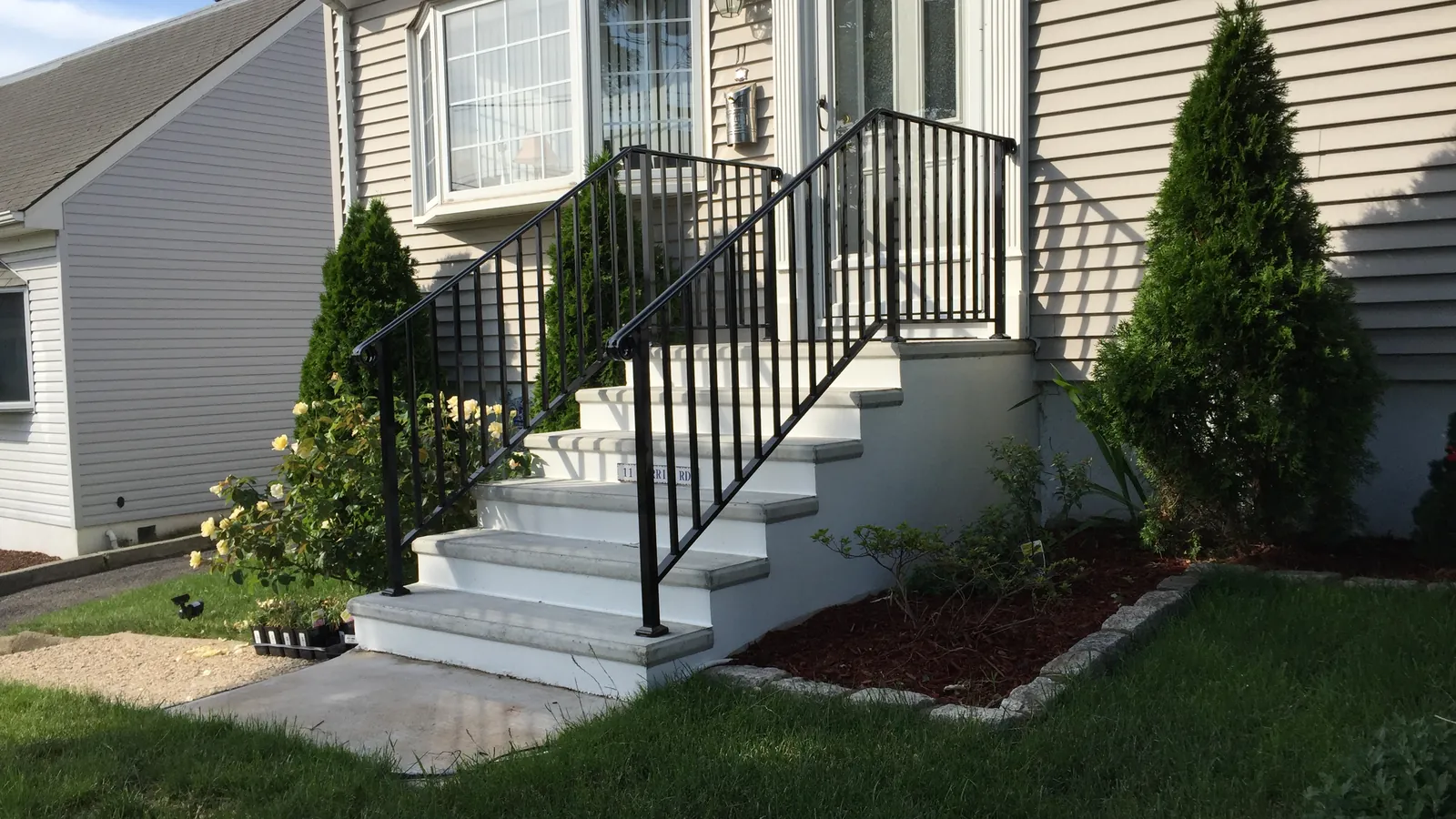
Poured concrete steps cost $200 to $500 per step in one national cost guide. That comes to $1,000 to $5,000 installed for 5 to 10 steps. In the guide’s opening summary, precast steps run $100 to $350 per step, or $500 to $3,500 installed.
These are market numbers, not our price list. The price moves with the door height, the landing and any old steps that come out first. For concrete steps around Lafayette, we look at the job or your photos and put the quote in writing.
What do concrete steps cost?
The national guide prices steps by how many you need. Its table counts about 7 inches of rise per step. Its prices include a landing platform when one is needed.
| Steps (rise to the door) | Precast, installed | Poured, installed |
|---|---|---|
| 3 steps (about 21 inches) | $300 to $1,100 | $600 to $1,500 |
| 5 steps (about 35 inches) | $500 to $1,800 | $1,000 to $2,500 |
| 10 steps (about 70 inches) | $1,000 to $3,500 | $2,000 to $5,000 |
| Per step | $100 to $350 | $200 to $500 |
A second national cost guide puts concrete steps at $400 to $6,000, with an average project of $3,500. It prices custom poured-in-place stairs at $1,800 to $6,000 and precast steps at about $600 to $2,000. Both guides are national, so a Louisiana job can land above or below them.
What drives the cost of concrete stairs and steps?
The cost of concrete steps climbs with each riser, and other lines add to it.
How high the door sits. The guide’s rule of thumb for the number of steps is the height in inches divided by 7. The residential code Louisiana enforces caps each riser at 7 3/4 inches. It also wants each tread at least 10 inches deep. Its published text is the 2021 International Residential Code with Louisiana amendments.
The landing at the door. The code wants a landing or floor on each side of each outside door. That landing is the small concrete porch, or stoop, at the door. It is at least as wide as the door and at least 36 inches deep. The guide adds that most stairs over 5 feet tall need a landing platform, and that raises the cost.
Width. Wider steps take more concrete. The second guide prices a 3-foot-wide step at $150 to $450. At 6 feet wide, it is $300 to $900 a step. The code wants a stairway at least 36 inches in clear width.
Tearing out the old steps. A national concrete removal guide puts taking out steps at a home entrance at $250 to $500 on average. The second guide adds $200 to $400 for removal. That part of the job is concrete removal and replacement.
A handrail. At four or more risers, the code wants a handrail on at least one side, 34 to 38 inches high. Railings run $20 to $250 per linear foot in the first guide, wood lowest and glass or cable highest. The railing is its own install, metal or wood, by whoever builds it. We plan the steps so the handrail and the landing fit.
A permit. The guide puts a permit for concrete steps at $100 to $1,000. It may or may not be needed, depending on size and local codes. The parish or city permit office answers permit questions. The permit is sorted out before work starts.
Groundwork. The guide notes that excavation or groundwork may add time and cost.
Do precast concrete steps cost less than poured steps?
Yes, in both guides. Precast steps are made ahead, hollow, and delivered in set sizes. The first guide says they cost less because they are hollow and easier to assemble. They typically come 3 to 5 feet wide and up to 6 steps tall.
For 5 to 10 precast steps, that guide splits the price three ways. The steps run $200 to $1,700, delivery $200 to $1,000 and setting labor $100 to $800. Home stores and concrete suppliers sell them, the guide says.
Poured steps are formed on site to the door and the ground, in any size or height. They cost more, with higher labor. In the guide, the forms and the rebar or mesh are typically part of the material cost.
Precast suits a door that matches a stock height and width. Poured steps suit a higher door, an odd width or a wide landing. They can also tie into new concrete patios and walkways.
Concrete steps for a mobile home follow the same math: the door height sets the risers. If a stock precast set fits, it is the lower price in the guide’s numbers. If not, poured steps are formed to that door on site.
Should you repair or replace concrete steps?
A chipped corner or a cracked tread can often stay. The first guide puts concrete step repair at $300 to $800 on average, for patching cracks or small sections. That work is concrete repair.
Steps that have cracked through, settled, tilted or pulled away from the house come out, and new steps are poured. Price that as removal plus new steps. Lifting a sunken step is a job for a concrete leveling company.
All concrete tends to crack, a ready-mix industry guide notes. The question is whether the steps still sit level and tight to the house. With proper care, the first guide says concrete steps last 30 to 40 years.
Why do some Louisiana houses need more steps?
In Lafayette, LCG’s flood rules can set how high a floor sits. In the mapped flood fringe, a new home’s lowest floor must be elevated to 1 foot above the base flood elevation. The same rule covers substantially improved homes. LCG covers the City of Lafayette and unincorporated Lafayette Parish.
A higher floor means more risers to the door. At four risers, the code’s handrail comes in. Where an open side sits more than 30 inches above the ground, the code wants a guard as well. Each of those adds to the cost.
Why do concrete steps settle and pull away from the house?
Lafayette Regional Airport averages 62.81 inches of rain a year, in NOAA’s 1991 to 2020 normals. Frost soils, common in Lafayette Parish, are poorly drained. They stay wet within 1.5 feet of the surface from December through April in most years.
If the base under steps was never compacted, wet ground can let them settle or tip away from the house. That is why the base under new steps should be compacted before the pour.
An isolation joint goes between new steps and the walk or slab they meet. A ready-mix industry guide lists stairs among the points that isolation joints separate from driveways and patios. The code allows an outside landing a slope of up to 2 percent, about a quarter inch per foot. Poured with that slope away from the door, the landing sheds rain.
Where do you start with new concrete steps?
Start with the height of the door and the shape the old steps are in. RockSolid Contracting is based in Lafayette and does concrete, demolition and drainage under one roof. We work about an hour’s drive around Lafayette, from the Acadiana towns east on Interstate 10 to Baton Rouge.
We pour steps on site, formed to your door and your ground. See poured concrete steps around Lafayette for how the work goes. We look at the job, or you send photos, and we put the quote in writing. Call or text (337) 520-8615.