Yard Drainage
Catch basins, channel drains, downspout lines, swales and driveway culverts for yards that hold water. We give rainwater a path away from the house and off the lot.
Learn More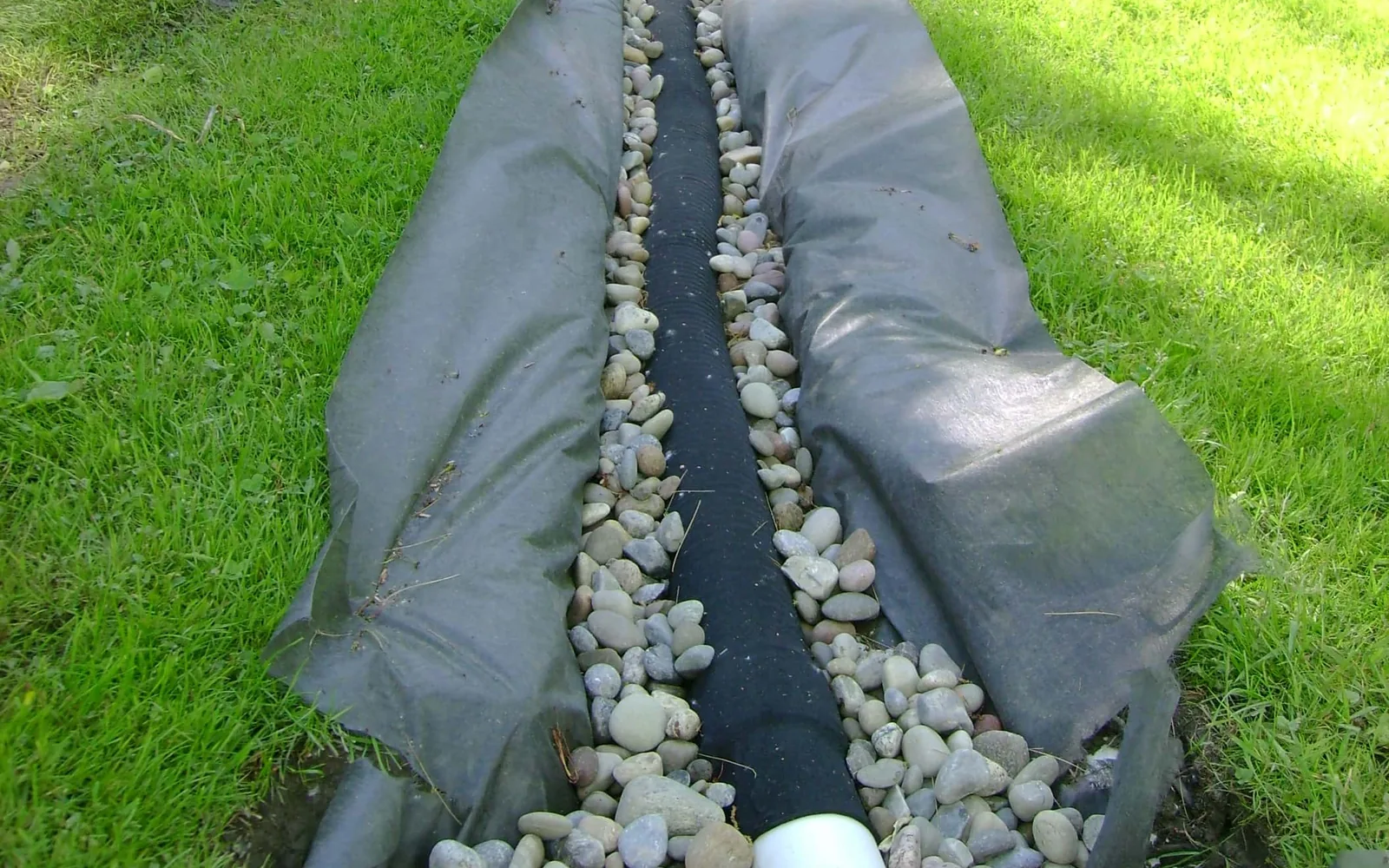
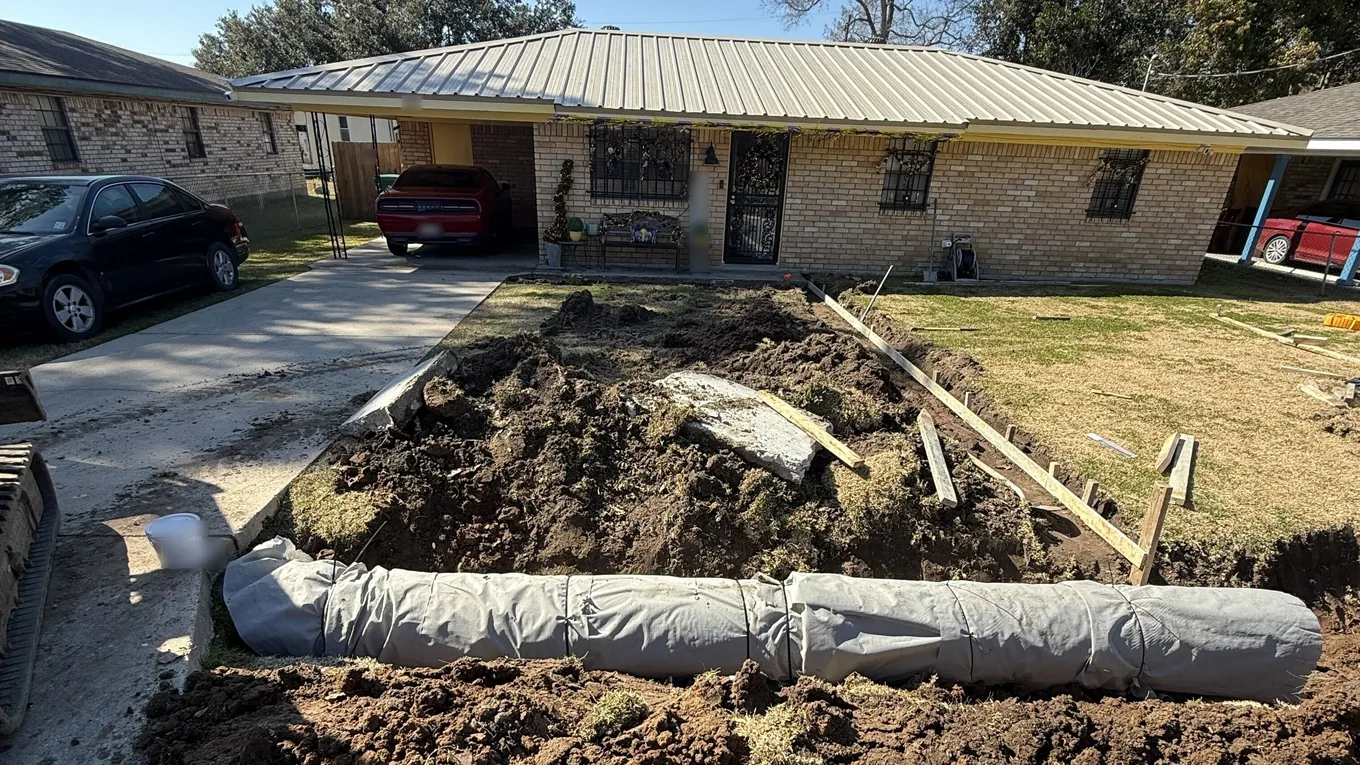
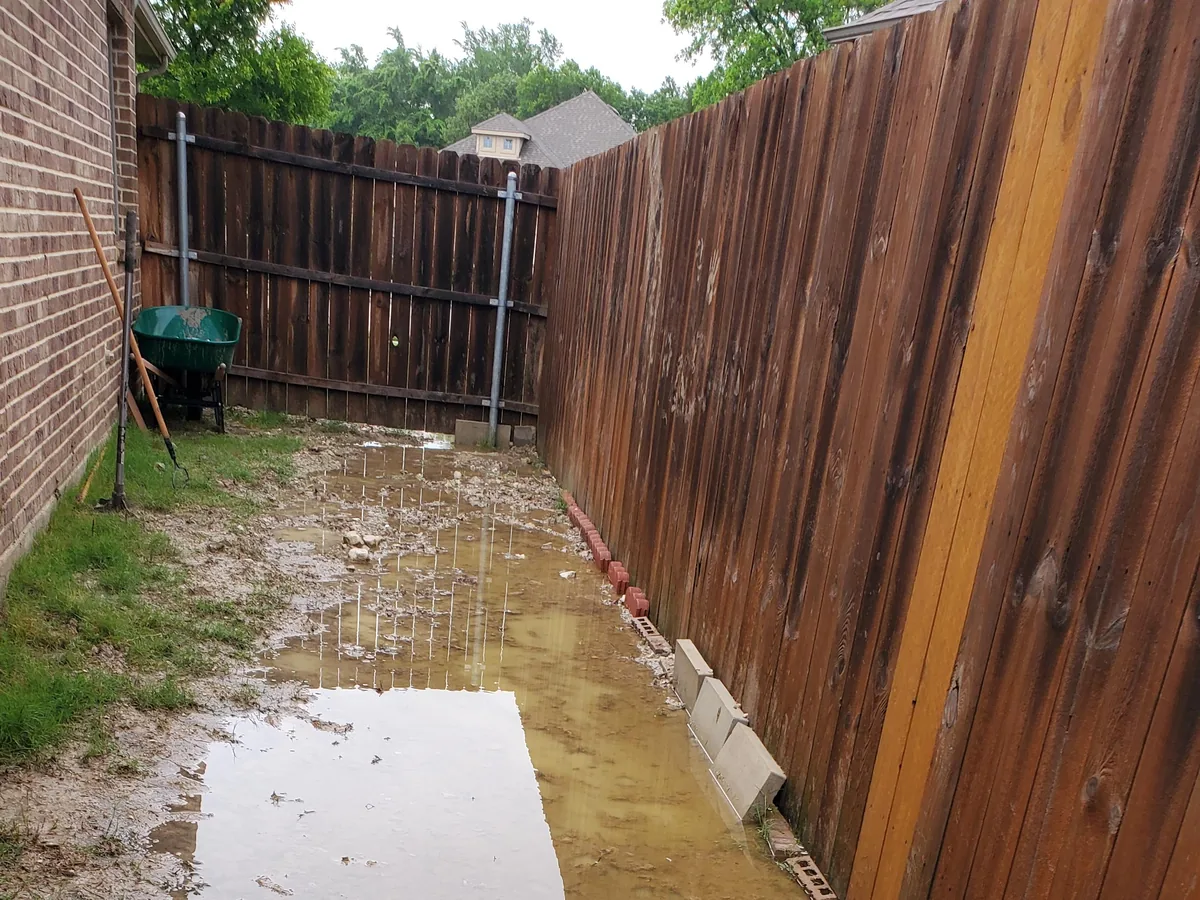
Water stands in the backyard for days after a rain. The ground along the house stays soft long after the sun comes out. French drain installation gives that water a path out of the soil. We lay perforated pipe in washed gravel and filter fabric, sloped to a spot where the water can leave.
RockSolid Contracting is a concrete contractor based in Lafayette that also installs French drains for homes across Acadiana. We work about an hour's drive around Lafayette, as far east as Baton Rouge on I-10. Call or text (337) 520-8615 and tell us where the water sits. We look at the job, or you send photos, and we put the quote in writing.
Tell us about the driveway, slab, drainage problem or teardown and where it is. We look at the job and put the quote in writing.
A French drain is a gravel-filled trench with a perforated pipe along the bottom. Filter fabric lines the trench so soil stays out of the gravel. Water seeps through the gravel into the pipe, and the pipe carries it downhill to an outlet. The LSU AgCenter calls it a subsurface system that gives water in saturated ground a way out.
It is the right fix when the ground itself stays wet after the rain stops. We put French drains along foundations and fence lines. They also go through low spots and the narrow strip between houses.
Water that sheets across the yard during a storm is surface water. It is often better handled at the surface, with yard drainage work like a catch basin or a swale. A swale is a shallow graded ditch that carries water. Some yards need both, and we do both.
We start by finding where the water sits and where it can leave the lot. Before any digging, a Louisiana 811 request gets the buried utility lines marked. Then we dig the trench with a mini excavator so the bottom falls steadily toward the outlet.
An LSU AgCenter guide lays out how one goes in. The trench runs 12 to 18 inches wide and 18 to 24 inches deep. Filter fabric goes in first, across the bottom and up the sides. Then comes a perforated pipe, typically 4 inches across, under washed gravel about 1 inch in size.
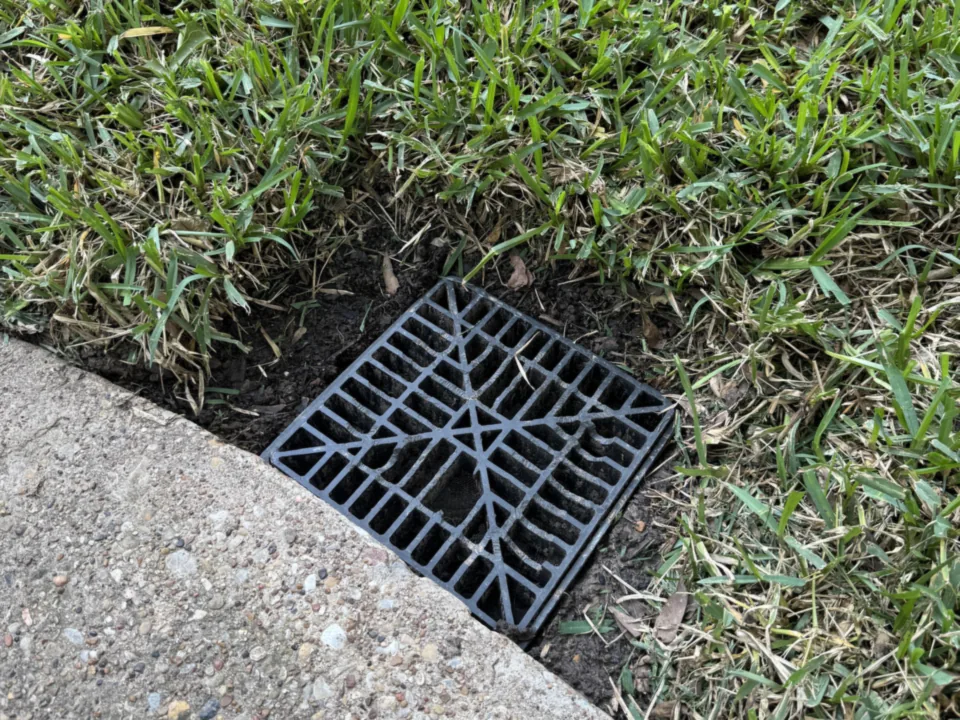
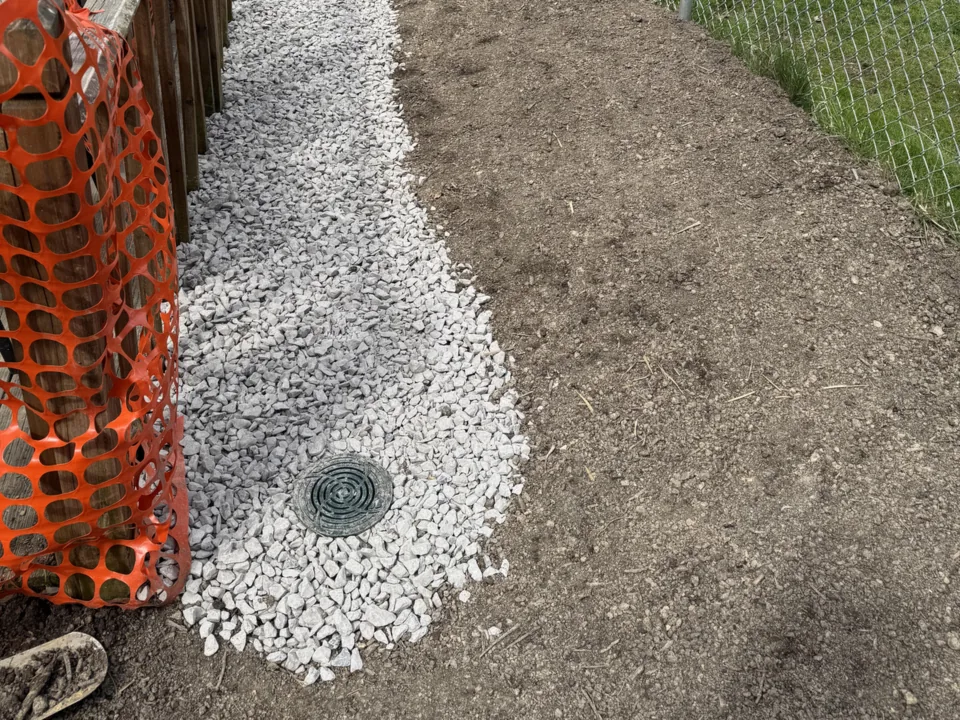
The top can stay gravel, which lets rain soak in fast. Or it gets a thin layer of topsoil so grass can grow back over it. At the lowest spot, a catch basin with a grate lets standing water drop right into the pipe.
Large parts of Lafayette Parish sit on silt loams that drain slowly. One of the main soils around Lafayette is a series called Frost silt loam. Federal soil survey records say it is wet within 18 inches of the surface from December through April most years. With the water table that close, a winter rain has little room to soak in.
NOAA climate normals put Lafayette at about 63 inches of rain a year. Frost soils also lie in broad, flat low areas that take in runoff from higher ground. That helps explain a backyard that holds water for days after a storm.
On ground this flat, the hard part of a French drain is fall. The pipe must run downhill all the way to its outlet, so we plan the depth and the outlet together. The filter fabric matters here too, because silt that washes into the gravel clogs it.
Call or text for a written quote. We work about an hour around Lafayette, from the Acadiana towns to Baton Rouge.
(337) 520-8615From the first call or text to the finished work, here is how it goes.
Call or text (337) 520-8615 and tell us about the job and where it is. Send photos if you like.
We come out to look at the site and where the water runs. Clear photos can stand in for that first look.
You get the quote in writing, with the work spelled out. Once you say yes, we set a date, and pour days follow the weather.
First comes the tear-out, or the forms and rebar for new concrete. Then the ready-mix truck arrives, and we pour and finish the slab. On drainage jobs, we dig the trench and set the pipe.
We take a final look at the work with you, and the site is cleaned up. We also tell you when the new concrete can take foot traffic and when it can take a car.
Common questions about French drains around Lafayette and across Acadiana. If yours is not here, call or text and ask.
Catch basins, channel drains, downspout lines, swales and driveway culverts for yards that hold water. We give rainwater a path away from the house and off the lot.
Learn More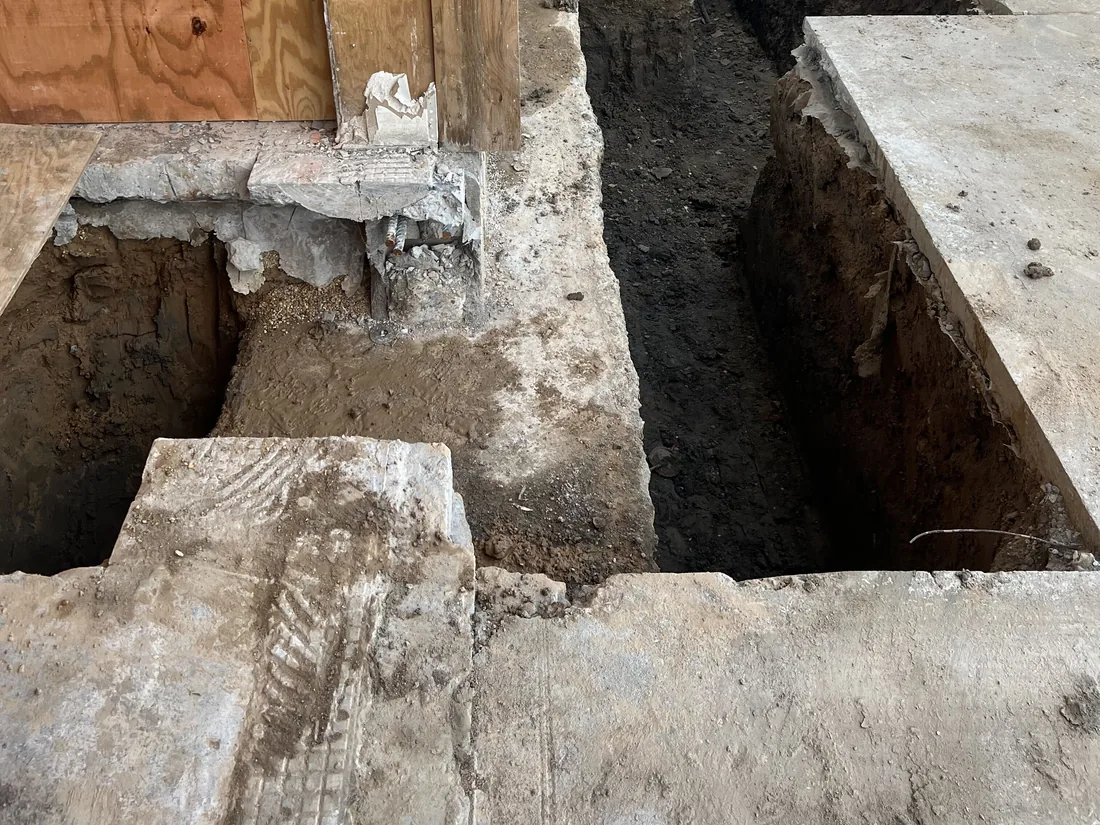
We pour slab foundations and footings for houses, additions, garages and outbuildings around Lafayette. Each one is dug and poured to the builder's or engineer's plan.
Learn More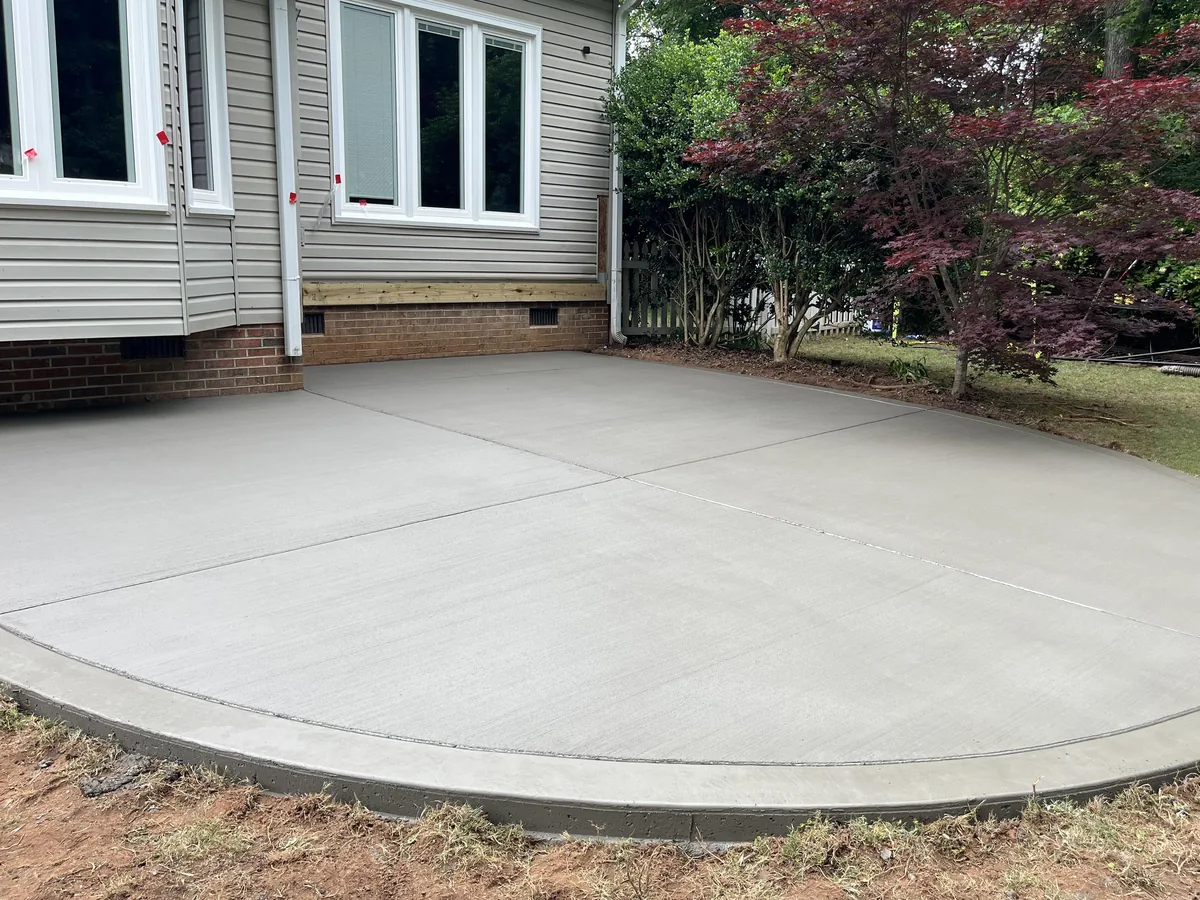
Concrete patios, porch slabs, walkways and sidewalks with a broom finish. Each one slopes away from the house so rain runs off.
Learn MoreOne call covers the whole job. The teardown and the new pour come from the same company, and so can the drainage.
We pour each slab to the thickness its use calls for, on a compacted base. Driveways and slabs get rebar or wire mesh. Control joints go in so shrinkage cracks land where they belong.
We look at the job first, on site or from the photos you send. Then the quote comes to you in writing, with the work spelled out.
Our work reaches about an hour around Lafayette, from Opelousas down to Abbeville. Baton Rouge, to the east, is in our area too.
Tell us about the job and the town it is in, and text us photos if you have them. Call or text (337) 520-8615 or use the form, and we will get back to you.
Tell us about the driveway, slab, drainage problem or teardown and where it is. We look at the job and put the quote in writing.