
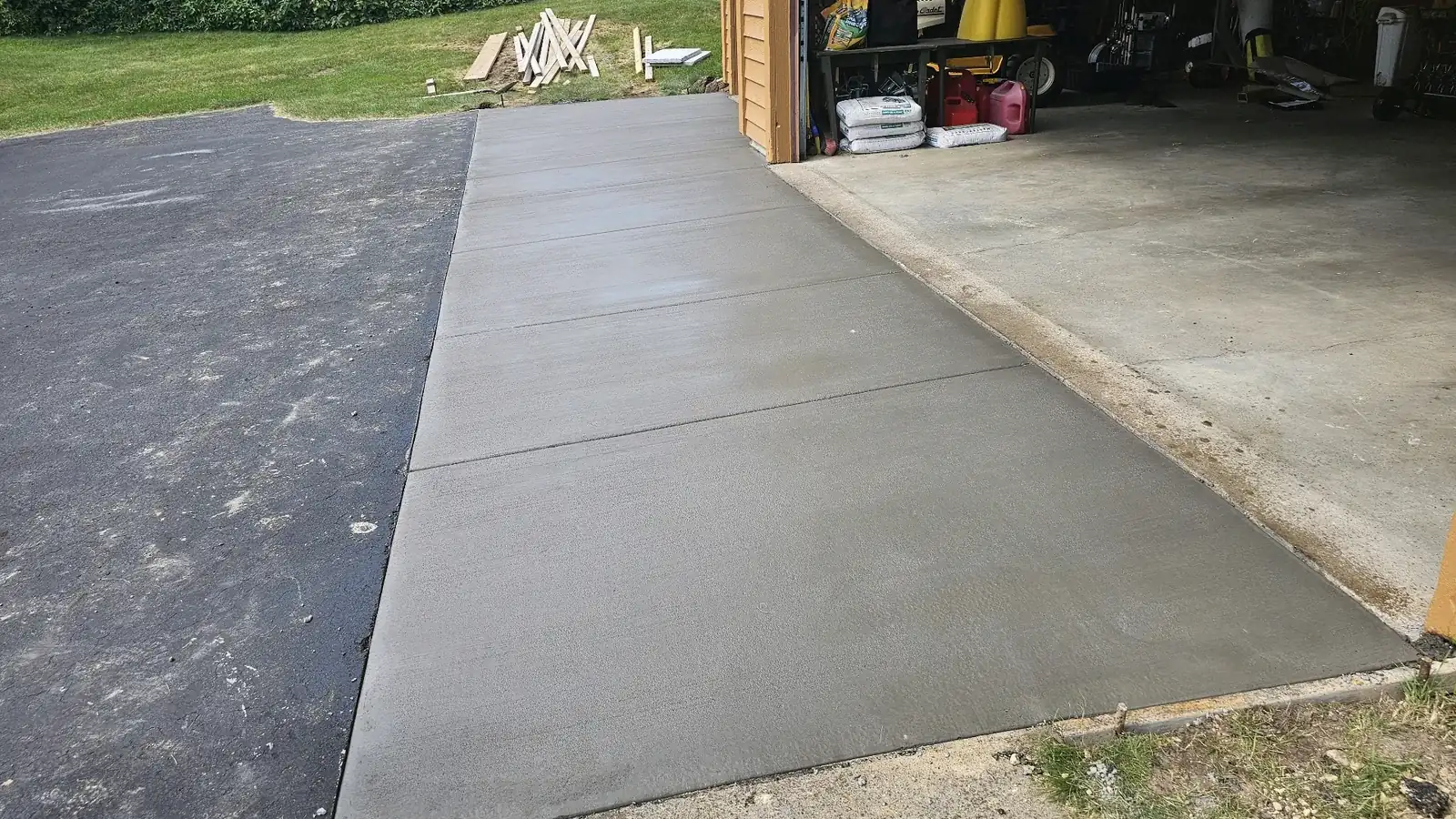
Concrete vs Asphalt Driveway: Which Is Better in South Louisiana?
Asphalt costs less up front. Concrete lasts longer and handles south Louisiana heat better. A national cost guide’s 2026 table puts asphalt at $5 to $12 or more per square foot installed. Concrete runs $6 to $15.
The same guide gives an asphalt driveway 15 to 30 years and a concrete driveway 30 to 40. Asphalt also needs sealcoat every few years. Our driveway work is concrete: we pour concrete driveways around Lafayette and across Acadiana. The asphalt facts below come from national guides.
How do concrete and asphalt driveways compare?
| Concrete | Asphalt | |
|---|---|---|
| Cost per square foot, installed (2026) | $6 to $15 | $5 to $12 or more |
| Lifespan | 30 to 40 years | 15 to 30 years |
| Upkeep | Joint and crack care; a sealer is optional | Sealcoat every 2 to 3 years, or reseal every 3 to 5 |
| Summer heat | Performs better in hot climates | Persistent heat can soften the surface |
| Time before you drive on it | About seven days | About three to five days |
The cost and lifespan rows come from one national cost guide. The rest comes from that guide and a national comparison guide. These are market numbers, not our price list.
What does each driveway cost per square foot?
In that 2026 national table, asphalt runs $5 to $12 or more per square foot, installed. Concrete runs $6 to $15, and gravel runs $1 to $3.
At those rates, a 20 by 20 driveway covers 400 square feet. That works out to about $2,000 to $4,800 or more in asphalt, and $2,400 to $6,000 in concrete. The guide adds that some asphalt contractors have a minimum charge of $2,000 or more.
For Louisiana numbers, see our post on concrete driveway cost in Louisiana. It puts published Louisiana figures for concrete at about $6 to $12 per square foot.
How long does each one last?
The national cost guide gives asphalt 15 to 30 years and concrete 30 to 40. It says asphalt in places with heavy rain or big temperature swings may need more upkeep. There, it might not last as long.
The comparison guide says a concrete driveway needs little maintenance or additional expense. On either surface, the base underneath and the water around it play a part.
What does Lafayette’s heat do to asphalt?
Summers here run long and hot. NOAA’s 1991 to 2020 normals put the July high at Lafayette Regional Airport at 91.5 F. The August normal high is 92.3 F.
Pavement in the sun gets far hotter than the air. The EPA cites a preliminary Arizona study where asphalt reached surface temperatures up to 152 F at mid-day.
The comparison guide says asphalt suits colder climates. It says intense, persistent heat can soften the surface. That can lead to cracks and crumbling edges. Soft asphalt can also stick to shoes. The same guide says concrete performs better in hotter climates.
How much upkeep does each one need?
Asphalt needs sealcoat to protect it. The national cost guide says sealcoat goes on every 2 to 3 years. The comparison guide says to seal new asphalt after 6 to 12 months, then every 3 to 5 years.
Concrete upkeep centers on the joints and any cracks. The comparison guide says concrete driveways do not require a sealer. Our concrete repair page covers filling cracks and patching chipped spots on a driveway that can stay.
Asphalt wins one point here. The comparison guide says cracks are easier to repair in asphalt, with less visible results than concrete. A patch on concrete tends to show more.
How soon can you drive on each one?
Asphalt is ready sooner. The comparison guide says new asphalt can be driven on in three to five days. The cost guide says to wait at least 24 to 48 hours, or 3 to 5 days in hot weather.
New concrete takes longer. The comparison guide says a new concrete driveway must cure for seven days before it can carry a vehicle. Plan on about a week, and pour days follow the weather.
Does either surface handle Lafayette’s rain better?
Neither surface fixes drainage by itself. NOAA’s normals give Lafayette Regional Airport 62.81 inches of rain a year. July alone averages 6.27 inches.
Concrete or asphalt, a driveway needs slope so water runs off it and away from the house. Where water stands beside a driveway, yard drainage can carry it off.
What is the rule where the driveway meets the street?
In the Lafayette Consolidated Government’s (LCG) jurisdiction, all driveways must be permitted. LCG’s design standards also cover the part of a driveway inside the public right-of-way. That part must be built of the same material as the street it joins, or a more durable one.
So the street in front of your house can shape your apron. Where a driveway crosses a roadside ditch, the culvert is set as part of the driveway job. The city or parish sizes it, and our driveway culverts page covers that work. Other towns and parishes set their own rules, and their permit offices answer for your lot. The permit is sorted out before work starts.
Is gravel worth a look?
Gravel costs the least up front, at $1 to $3 per square foot in the same 2026 table. It has its own upkeep. A national guide to gravel driveways says poor grading causes puddles, erosion and gravel that shifts out of place. It adds that wet climates need better drainage.
The street rule applies to gravel too. Where a gravel drive meets a paved street in LCG’s area, the right-of-way part may need to match the street. The permit office gives the answer for your lot.
How do you get a quote for a concrete driveway?
If concrete fits your plans, start with a quote. We look at the driveway, or you send photos, and we put the quote in writing. See how we pour concrete driveways, including the apron at the street. Call or text (337) 520-8615.